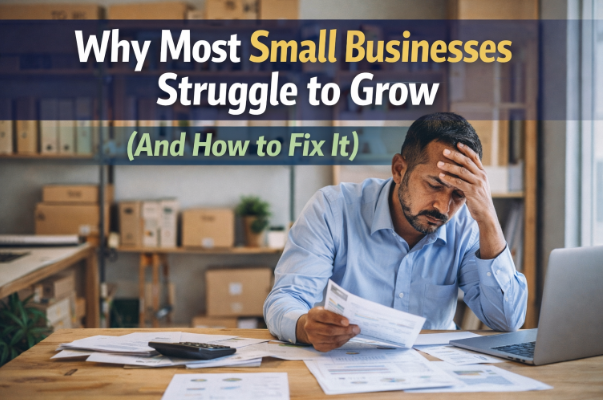
Running a small business is exciting, but sustaining consistent growth is where most entrepreneurs face real challenges. Many business owners work hard, invest time and money, yet still struggle to scale. If you’ve ever wondered why small businesses struggle to grow, you’re not alone.
Growth is not just about increasing sales—it’s about building systems, improving efficiency, and making strategic decisions. In this article, we’ll explore the most common issues and practical solutions to overcome them.
Understanding Small Business Growth Challenges
Before fixing the problem, it’s important to identify the root causes. Most small business growth challenges arise from a lack of clear direction, poor planning, and inefficient execution.
Many businesses operate without a structured strategy, which leads to inconsistent results and slow progress. Without a roadmap, even the best efforts can fail to deliver long-term growth.
1. Lack of Clear Business Strategy
One of the main reasons why small businesses struggle to grow is the absence of a well-defined strategy. Many entrepreneurs focus only on daily operations and ignore long-term planning.
How to Fix It:
Develop a clear business plan that outlines your goals, target audience, and growth roadmap. A strong strategy helps you make better decisions and stay aligned with your objectives.
2. Focusing on Revenue Instead of Profit
A common mistake among business owners is prioritizing revenue over profitability. This is one of the key small business growth problems that can lead to financial instability.
How to Fix It:
Focus on improving profit margins by reducing unnecessary expenses, optimizing pricing strategies, and increasing operational efficiency. Sustainable growth comes from profit, not just sales.
3. Poor Financial Management
Many entrepreneurs face problems faced by small businesses due to poor financial planning. Lack of cash flow management, budgeting, and financial tracking can slow down growth.
How to Fix It:
Maintain proper financial records, monitor cash flow regularly, and plan your expenses wisely. Financial clarity is essential for making informed business decisions.
4. Inefficient Operations
Operational inefficiencies are a major factor in why small businesses fail to grow. When processes are unorganized, it leads to wasted time, higher costs, and reduced productivity.
How to Fix It:
Streamline your operations by creating standard processes, automating repetitive tasks, and improving team coordination. Efficient systems enable faster and smoother growth.
5. Lack of Marketing and Sales Strategy
Many businesses struggle because they don’t have a consistent approach to marketing and sales. This often leads to irregular customer acquisition and unstable revenue streams.
How to Fix It:
Invest in structured marketing strategies that focus on your target audience. Combine digital marketing, branding, and sales processes to create a predictable growth model.
6. Trying to Do Everything Alone
Entrepreneurs often try to manage everything themselves, which limits scalability. This is a hidden but critical reason why small businesses struggle to grow.
How to Fix It:
Delegate responsibilities and build a strong team. Focus on high-impact activities while allowing experts to handle specialized tasks.
7. Lack of Data-Driven Decision Making
Making decisions based on assumptions rather than data can lead to poor outcomes. Many businesses fail to analyze performance metrics, resulting in slow growth.
How to Fix It:
Use data to track performance, identify trends, and make informed decisions. This improves efficiency and helps you adapt to market changes.
How to Fix a Struggling Business: Proven Strategies
If your business growth has slowed down, don’t panic. Here are some proven strategies to get back on track:
- Define clear short-term and long-term goals
- Focus on profitability, not just revenue
- Improve operational efficiency
- Build a strong marketing and sales system
- Use data to guide decisions
- Seek expert guidance when needed
These steps can help you overcome small business growth challenges and create a strong foundation for long-term success.
The Role of Expert Guidance in Business Growth
Sometimes, internal efforts are not enough to solve deep-rooted issues. Seeking professional support can help identify gaps, optimize strategies, and accelerate growth.
Working with experienced professionals provides clarity, direction, and actionable solutions tailored to your business needs. Whether it’s improving profitability, streamlining operations, or scaling efficiently, expert guidance can make a significant difference.
Final Thoughts
Understanding why small businesses struggle to grow is the first step toward building a successful and scalable business. Growth challenges are common, but they are not impossible to overcome.
By focusing on strategy, improving efficiency, managing finances effectively, and making informed decisions, you can transform your business into a high-performing and profitable venture. The key is to take consistent action and continuously improve your approach.
About the Author
This article is contributed by the team at Varun Surana, a trusted name in business consulting, helping entrepreneurs and SMEs achieve sustainable growth and profitability through structured strategies and execution-driven solutions.
Learn more about their services here: Business Consultant in India